Home / The Journal / What to Wear in Egypt: A Packing Guide for a Luxury Trip
The Journal
What to Wear in Egypt: A Packing Guide for a Luxury Trip
Shoulders and knees covered, a scarf for mosques, a warm layer for winter mornings and one smart casual outfit: what to wear in Egypt, setting by setting.
In Egypt, wear light, loose clothes that cover your shoulders and knees almost everywhere: temples, tombs, churches and city streets. Women add a scarf for mosques, where hair is covered and shoes come off. Pack a warm layer for winter mornings, closed shoes for tomb stairs, and one smart casual outfit for dinners on board and in the heritage hotels.
Key takeaways
- Temples and other holy sites customarily expect shoulders and knees covered, and the UK government advises dressing modestly, especially in rural areas, mosques and souqs.
- In a mosque, women cover their hair and everyone takes off their shoes before the prayer hall; socks can stay on.
- Evening dress on a Nile cruise is set by each line: Uniworld recommends casual and cool attire, and Viking says it has no formal nights.
- Luxor averages a daily high of 41.4°C (107°F) in July and a low of 5.9°C (43°F) in January, so pack for strong sun and for cold mornings.
- Photos seen as damaging to Egypt's image are illegal, military sites and the Suez Canal are off limits, and drones need Ministry of Defence permission.
What to wear in Egypt, setting by setting
One rule covers most of a private journey in Egypt: light, loose clothes that cover the shoulders and knees. The table shows where that rule tightens, where it relaxes, and what to add for each part of the trip.
| Setting | What to wear | Good to know |
|---|---|---|
| Temples and tombs | Shoulders and knees covered, light loose layers, closed shoes with grip, a hat | Royal tombs in the Valley of the Kings are entered down corridors and stairways cut into the hillside |
| Mosques | Shoulders and knees covered; women cover their hair; shoes that slip off easily | Cover-ups and headscarves are often available to borrow; shoes come off before the prayer hall |
| Churches, such as those in Coptic Cairo | Shoulders and knees covered, a light scarf in your bag | The scarf covers your head in any building that requires it |
| Nile cruise dinners | What the cruise line asks for | Uniworld: casual and cool, with footwear always worn in the dining room; Viking: no formal nights |
| Heritage hotels | Smart casual for dinner | Each restaurant sets its own rules, so ask when the table is booked |
| On deck and at Red Sea resorts | Swimwear and shorts | Fine on Nile cruise boats and at Red Sea resorts; cover up again for towns and sites |
| Desert walks and early starts | A warm layer and closed shoes | Luxor's average January low is 5.9°C (43°F) |
| City streets and markets | Modest dress: for women, knee-length or longer and long sleeves; for men, long trousers | Official advice: men should not wear shorts outside tourist areas |
Modest dress: what the official advice says
The UK government's travel advice (updated 4 August 2026) is short: dress modestly, especially in rural areas, mosques and souqs. The Government of Canada's advice is more specific: for women, knee-length or longer dresses and long sleeves are preferable, and men should not wear shorts outside tourist areas. Rules for shorts and swimwear at a resort do not carry over to a village street or a temple.
Travel companies put the same advice in practical terms. G Adventures tells women and men alike to cover from the upper arms to the knees, and notes that long, loose clothing keeps you cool. Lonely Planet says beach resorts are more relaxed than the cities and that loose clothing is the safe choice.
For women
Midi or long skirts and dresses, loose trousers and tops with sleeves meet the dress rules at every site. Lonely Planet advises women to avoid low-cut tops and short shorts or skirts. A headscarf is needed only to visit a mosque, according to G Adventures, but a light scarf or wrap in your bag also covers bare shoulders when a site asks for it.
For men
Long, light trousers and shirts with sleeves. The shoulders-and-knees rule at temples, mosques and other holy sites applies to men as well, and Canada's advice says men should not wear shorts outside tourist areas.
Mosques and churches
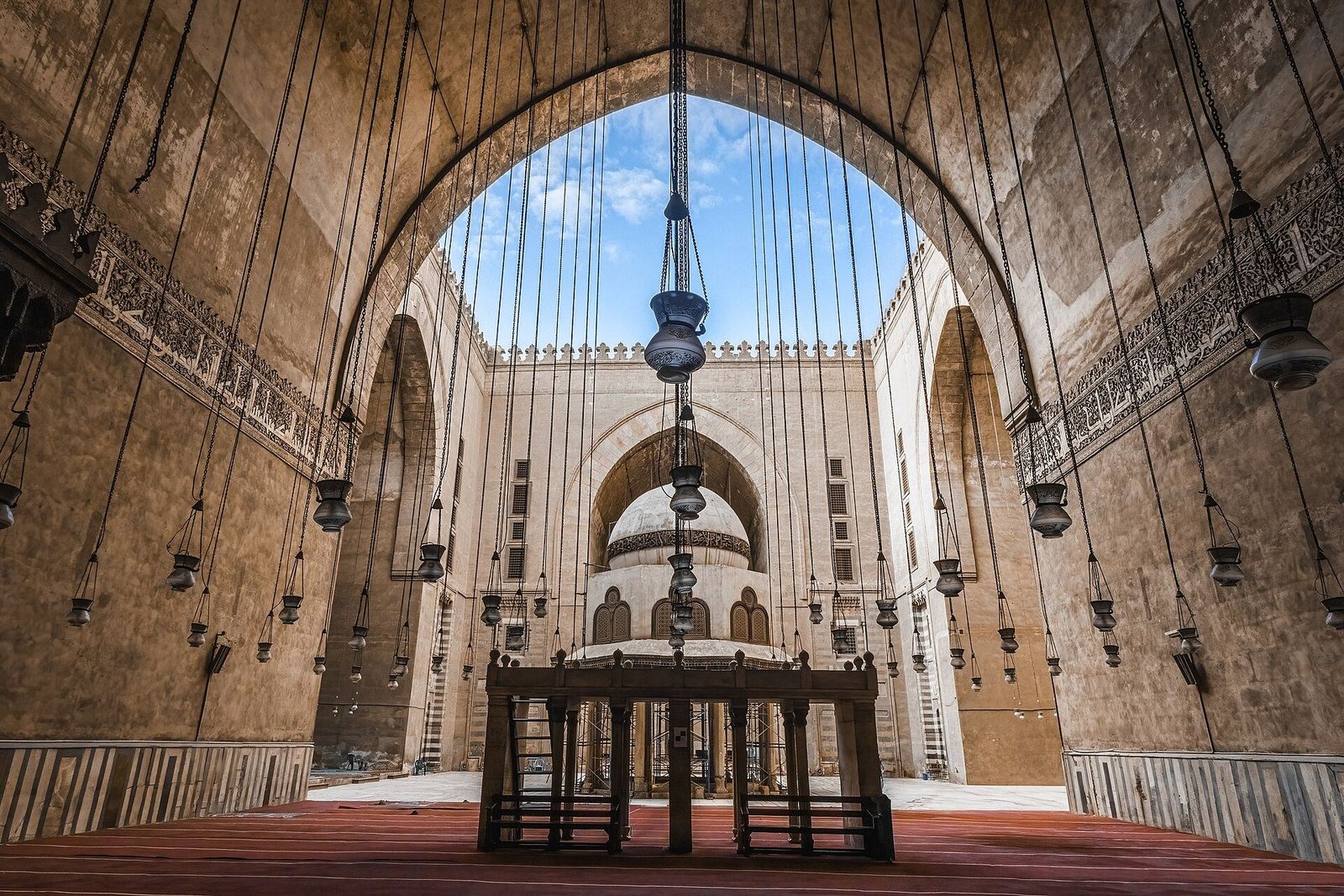
Several journeys spend a day in Islamic or Coptic Cairo; the Cairo and a Nile Cruise journey, for example, gives a day to the Citadel, Coptic Cairo and Khan El Khalili. Customary mosque dress means shoulders and knees covered, and women cover their hair; Lonely Planet goes further and says covered to the ankles and wrists. Cover-ups and headscarves are often available to borrow at the door.
By custom, shoes come off before the prayer hall, and socks can stay on. Visit outside prayer times and do not walk in front of people who are praying. Guides say non-Muslim visitors are welcome at Cairo mosques outside prayer times. Churches follow the same customary rule as temples and other holy sites: shoulders and knees covered, with a scarf ready for any building that requires a covered head.
Evenings on a Nile cruise and in heritage hotels
Evening dress on the river is set by each cruise line, not by one rule for every ship. Uniworld's own guidance for its Egypt program recommends "casual and cool attire" for evenings, requires footwear at all times in the dining room, says sport jackets and cocktail dresses are not needed at any time, and suggests one smart casual outfit for its onboard Gala Reception. Viking lists "no formal nights" among the things it is not.
For the ships on this site's luxury Nile cruises, such as The Oberoi Philae and The Oberoi Zahra, ask about evening dress when you book. One smart casual outfit is a safe choice for a dressier dinner without packing formal wear.
The heritage hotels are similar. The Marriott Mena House was built in 1869 as a royal hunting lodge for Khedive Ismail, and the Old Cataract in Aswan was built in 1899 by Thomas Cook and is open while renovation work continues. Both are part of Egypt's Palace Hotels journey. Their restaurants set their own dress rules; smart casual for dinner is the safe choice, and the guest relations team can be asked before you go.
Heat, sun and layers by month
The US Centers for Disease Control and Prevention (CDC) warns that heat-related illness, such as heat stroke, can be deadly. Its advice for Egypt: eat and drink regularly, wear loose and lightweight clothing, limit physical activity during high temperatures, use sunscreen, wear protective clothing and seek shade during the hottest time of day.
| Month | Cairo average high / low | Luxor average high / low | What to add |
|---|---|---|---|
| January | 19.0°C (66°F) / 9.7°C (49°F) | 23.0°C (73°F) / 5.9°C (43°F) | A warm layer for mornings, evenings and the deck |
| April | 28.2°C (83°F) / 15.4°C (60°F) | 35.3°C (96°F) / 16.9°C (62°F) | Sun cover by day, a light layer for evenings |
| July | 34.8°C (95°F) / 22.9°C (73°F) | 41.4°C (107°F) / 24.7°C (76°F) | Loose, lightweight clothing, a hat and sunscreen |
| October | 29.7°C (85°F) / 19.0°C (66°F) | 35.3°C (96°F) / 18.4°C (65°F) | Sun cover by day, a light layer for evenings |
Guides advise a wide-brimmed hat, high-SPF sunscreen and sunglasses, and name January and February as the coolest stretch, when a light layer is worth packing. That layer also matters on a dahabiya journey, which can include a walk at Wadi El Shat or a visit to prehistoric rock inscriptions in the desert. At Abu Simbel, a guide notes there is no shade on the walk from the parking area to the temples. For the full picture by month, see the best time to visit Egypt.
Shoes for tombs, pyramids and temple paths
The sites decide the shoes. Royal tombs are entered by descending corridors and stairways cut deep into the hillside. At the Valley of the Kings, a short tram ride of about 3 minutes takes visitors to the tombs, followed by a short uphill walk to the entrances. Inside the Great Pyramid you climb rough steps, crouch to enter and climb bent over up a low, steep passage. At Abu Simbel a paved path leads down the hill to the temples and another leads back up, and Philae can only be reached by boat.
Closed, flat shoes with a good grip handle all of these. Add a pair that slips off easily for mosque visits, and something smarter for dinner, since Uniworld, for one, requires footwear in its dining room at all times.
Photography: what is allowed
The UK government's advice says it is illegal to take or share photos considered damaging to the country's image, that military sites and the Suez Canal are prohibited, and that drones need permission from the Ministry of Defence. The US State Department's advisory, issued July 2025, warns that visitors may be detained for posting anything on social media seen as critical of Egypt or its allies, or for disrespecting its cultural sites. Check your own government's current advice before you travel.
At the monuments and museums run by the Ministry, photography with a mobile phone is free of charge. At the Grand Egyptian Museum, personal photography is allowed except in the Tutankhamun Galleries, where only mobile phones may be used and some areas are excluded; tripods, monopods, selfie sticks, drones and external lighting are not allowed, and other visitors and staff should not be photographed without their consent. The National Museum of Egyptian Civilization asks visitors not to use flash.
A short packing list
- Tops with sleeves and long, loose trousers, skirts or dresses in light fabrics.
- A light scarf or wrap for mosques and for covering shoulders.
- Closed walking shoes with grip for tomb stairways and temple paths, plus a pair that slips off for mosques.
- A wide-brimmed hat, sunglasses and high-SPF sunscreen.
- A warm layer for winter mornings, evenings on deck and desert walks.
- Swimwear for the pool deck and the Red Sea.
- One smart casual outfit for dinners on board and in the heritage hotels.
Small notes for tips belong in the day bag too; see tipping in Egypt on a private trip. What to arrange before you fly is in the Egypt travel checklist.
Questions travelers ask
What should women wear in Egypt?
Clothes that cover the shoulders and knees, in light, loose fabrics. The Government of Canada's travel advice says knee-length or longer dresses and long sleeves are preferable for women, and Lonely Planet advises against low-cut tops and short shorts or skirts. Carry a light scarf: women cover their hair in mosques, where headscarves are often available to borrow. Beach resorts and Nile cruise boats are more relaxed.
Can you wear shorts in Egypt?
On a Nile cruise boat or at a Red Sea resort, yes: G Adventures says swimsuits and shorts are fine there. Elsewhere, cover up. Canada's official advice says men should not wear shorts outside tourist areas, and temples, mosques and churches customarily expect shoulders and knees covered, for men as well as women.
Is there a dress code on a Nile cruise?
Each line sets its own. Uniworld recommends casual and cool attire for evenings in Egypt, requires footwear in the dining room at all times and suggests one smart casual outfit for its Gala Reception. Viking says it has no formal nights. For other ships, ask when you book; one smart casual outfit is a safe choice for a dressier evening.
Do women need to cover their hair in Egypt?
Only in mosques, and in any other building that asks for a covered head. G Adventures says a headscarf is needed only to visit a mosque. Cover-ups and headscarves are often available to borrow at mosques, but a light scarf of your own is simpler, and it also covers bare shoulders when a site asks for it.
What shoes should you pack for Egypt?
Closed, flat shoes with a good grip. Royal tombs are entered down corridors and stairways cut into the hillside, the Great Pyramid's interior means rough steps and a low, steep passage, and Abu Simbel has a paved path down to the temples and back up. Add a pair that slips off easily for mosques, where shoes come off before the prayer hall.
Can you take photos at Egyptian temples and museums?
Yes, with limits. Photography with a mobile phone is free of charge at the Ministry's monuments and museums. At the Grand Egyptian Museum, only mobile phones may be used in the Tutankhamun Galleries, and tripods, selfie sticks and drones are not allowed. Under UK advice, military sites and the Suez Canal are off limits, and drones need Ministry of Defence permission.
The Journal
Keep reading.
 The Journal
10 Days in Egypt: A Luxury Itinerary, Day by Day
Ten days in Egypt three ways: a Nile cruise with Abu Simbel, a dahabiya from Esna, or palace hotels with a short cruise. Each one day by day, with where you sleep.
 The Journal
7 Days in Egypt: A Luxury Itinerary, Day by Day
Seven days in Egypt, day by day: where you go, where you sleep and which ship sails the 3-night cruise, plus the 8-day version with 4 nights from Luxor.
 The Journal
An Egypt Honeymoon in Luxury: How to Plan It
A luxury Egypt honeymoon works when the pace is slow: a dahabiya or small ship on the Nile, a night at the Old Cataract in Aswan and a few days on the Red Sea.