Home / The Journal / What Language Is Spoken in Egypt? A Traveler's Guide
The Journal
What Language Is Spoken in Egypt? A Traveler's Guide
Arabic is Egypt's official language, but daily life runs in spoken Egyptian Arabic. Where English, French, Coptic and Nubian fit in, and which languages the guides speak.
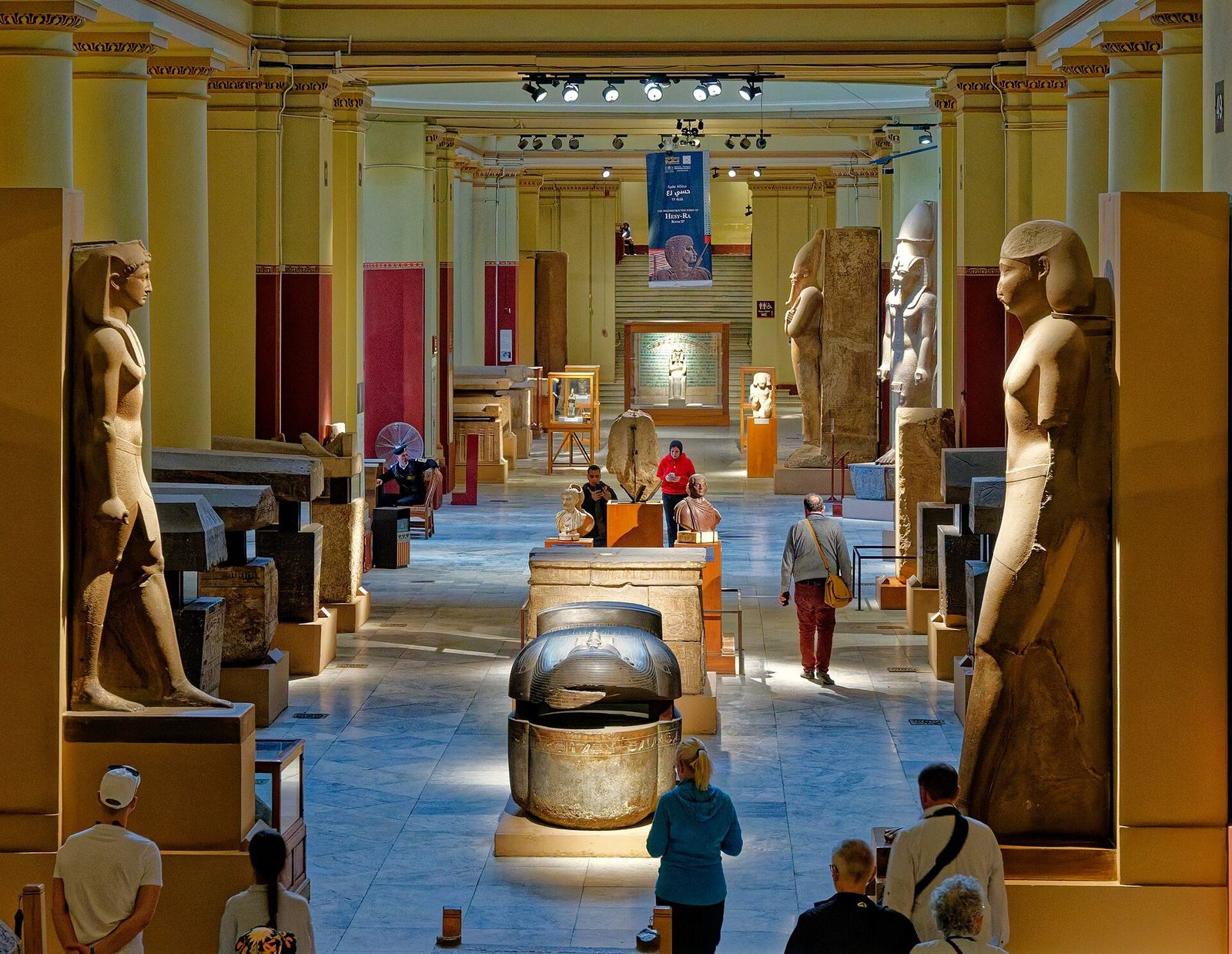
Arabic is the language spoken in Egypt. Article 2 of the Constitution makes it the official language, and in daily life most Egyptians speak a vernacular dialect of Arabic that differs greatly from the literary language. Most educated Egyptians are also fluent in English or French or both, and Coptic, a late form of ancient Egyptian, survives only in the liturgy of the Coptic Orthodox Church.
Key takeaways
- Arabic is Egypt's official language under Article 2 of the Constitution, which also makes Islam the religion of the State.
- Day to day, most Egyptians speak a vernacular dialect of Arabic; as in other Arab countries, the spoken language differs greatly from the literary one.
- Most educated Egyptians are fluent in English or French or both, in addition to Arabic.
- Coptic, a late form of ancient Egyptian, continues only as the liturgical language of the Coptic Orthodox Church; the last dated hieroglyphic inscription was carved at Philae in 394 AD.
- The journeys include a guide who speaks English, Portuguese, German or Spanish.
What language is spoken in Egypt day to day
Arabic, in two forms. Arabic is the language of the State: Article 2 of the Constitution says that Islam is the religion of the State and Arabic is its official language. In daily life, most Egyptians speak one of several vernacular dialects of Arabic, the spoken Arabic of Egypt known as Egyptian Arabic. As in other Arab countries, this spoken vernacular differs greatly from the literary language. Where Egypt sits between two regions is explained in is Egypt in Africa or the Middle East.
Egypt's languages at a glance
| Language | Its place in Egypt today |
|---|---|
| Arabic | The official language of the State (Constitution, Article 2). |
| Spoken Egyptian Arabic | The vernacular that most Egyptians speak day to day; it differs greatly from the literary language. |
| English and French | Most educated Egyptians are fluent in English or French or both, in addition to Arabic. |
| Coptic | A late form of the ancient Egyptian language, continued only as the liturgical language of the Coptic Orthodox Church. |
| Nubian languages | Spoken in southern Egypt, chiefly along the banks of the Nile, where Nobiin and Kenzi are spoken. |
| Ancient Egyptian in hieroglyphs | Not spoken today; the last dated hieroglyphic inscription was carved at Philae in 394 AD. |
| Your guide's language | On the journeys: English, Portuguese, German or Spanish. |
Do people in Egypt speak English?
Many do. Britannica's account of Egypt's languages is that most educated Egyptians are fluent in English or French or both, in addition to Arabic.
At the Grand Egyptian Museum, the official services run in Arabic and English. The museum's own guided tour runs in Arabic or English, and it is a group tour with other visitors, not a private one. The museum's audio guide comes in Arabic, English and Japanese. A private tour at the museum in a language other than English or Arabic is booked by email with the museum's tour partner.
Your guide's language on a private journey
On a private journey, the explanations at each site come from your own guide, in your language. The journeys include a guide who speaks English, Portuguese, German or Spanish; a few of them list a dedicated English-speaking guide or Egyptologist instead. On land, the guide, the vehicle and the driver are for your group alone, and a representative meets you at the airport.
When you ask for a proposal, ask which language your guide will speak, along with the license and training behind it. For what a licensed guide does on each kind of day, see what to expect from a private Egyptologist guide.
Coptic: the language of the Coptic church
Coptic is a latter form of the ancient Egyptian language. It is no longer an everyday language: it continues only as the liturgical language of the Coptic Orthodox Church. It is heard in church services: the main Coptic Christmas Eve liturgy, on the evening of 6 January, is led by the Coptic Pope at the Cathedral of the Nativity of Christ in the New Administrative Capital, and Coptic Christmas, on 7 January, is a national public holiday.
Nubian languages in the south
Along the Nile in southern Egypt and in Sudan, Nubian languages are spoken, chiefly Nobiin and Kenzi (also written Kenuzi). Modern Nubian is written in an adaptation of the Coptic alphabet. Several journeys include a Nubian village near Aswan in the program, and on others it is an optional tour.
Hieroglyphs: a script of the past
Hieroglyphs are the script of the ancient Egyptian language, and no one speaks that language in its ancient form today. A priest of Isis named Esmet-Akhom carved the very last dated hieroglyphic inscription at the Temple of Isis at Philae, in 394 AD. The language lived on in a later form, Coptic, in the church.
For visitors, hieroglyphs live on in the temples and in one souvenir: the cartouche, the oval frame enclosing hieroglyphs that represent a name.
Arabic in the names you will see
Many place names and dishes on a journey carry Arabic words, which makes them easier to remember:
- Deir el-Bahari (Dayr al-Bahri), the bay in the cliffs of Luxor's west bank where Hatshepsut's temple stands: Arabic for "northern monastery".
- Kom Ombo, the temple town on the Nile: from the Arabic kum, "mound".
- Fustat, in Old Cairo: from the Arabic word for tent.
- Om Ali, the bread pudding: "Mother of Ali".
Questions travelers ask
What is the official language of Egypt?
Arabic. Article 2 of Egypt's Constitution states that Islam is the religion of the State and Arabic is its official language. In daily life most Egyptians speak one of several vernacular dialects of Arabic, and, as in other Arab countries, the spoken vernacular differs greatly from the literary language.
Do people speak English in Egypt?
Many do: most educated Egyptians are fluent in English or French or both, in addition to Arabic. The Grand Egyptian Museum's own guided tour runs in Arabic or English. On the journeys on this site, the guide speaks English, Portuguese, German or Spanish, so the explanations at the sites come in your language.
Is Egyptian Arabic different from standard Arabic?
Yes. Most Egyptians speak one of several vernacular dialects of Arabic, and, as in other Arab countries, the spoken vernacular differs greatly from the literary language. Arabic itself is the official language under Article 2 of the Constitution; the vernacular is the Arabic you hear in conversation around you.
Do Egyptians still speak the ancient Egyptian language?
No. Coptic, a latter form of the ancient Egyptian language, continues only as the liturgical language of the Coptic Orthodox Church. Hieroglyphs, the script of ancient Egyptian, went out of use long ago: a priest of Isis carved the last dated hieroglyphic inscription at the Temple of Isis at Philae in 394 AD.
What languages do the guides speak on a private Egypt trip?
The journeys on this site include a guide who speaks English, Portuguese, German or Spanish; a few list a dedicated English-speaking guide or Egyptologist. The guide is private: on land, the guide, the vehicle and the driver are for your group alone, so the explanations come in your language and at your pace.
What language do Nubians speak in southern Egypt?
Nubian languages are spoken in Sudan and southern Egypt, chiefly along the banks of the Nile, where Nobiin and Kenzi (Kenuzi) are spoken. Modern Nubian is written in an adaptation of the Coptic alphabet. Several journeys include a visit to a Nubian village near Aswan, in the program or as an optional tour.
The Journal
Keep reading.
 The Journal
10 Days in Egypt: A Luxury Itinerary, Day by Day
Ten days in Egypt three ways: a Nile cruise with Abu Simbel, a dahabiya from Esna, or palace hotels with a short cruise. Each one day by day, with where you sleep.
 The Journal
7 Days in Egypt: A Luxury Itinerary, Day by Day
Seven days in Egypt, day by day: where you go, where you sleep and which ship sails the 3-night cruise, plus the 8-day version with 4 nights from Luxor.
 The Journal
An Egypt Honeymoon in Luxury: How to Plan It
A luxury Egypt honeymoon works when the pace is slow: a dahabiya or small ship on the Nile, a night at the Old Cataract in Aswan and a few days on the Red Sea.